Kite Festival Celebrating Colors, Culture, and the Skies
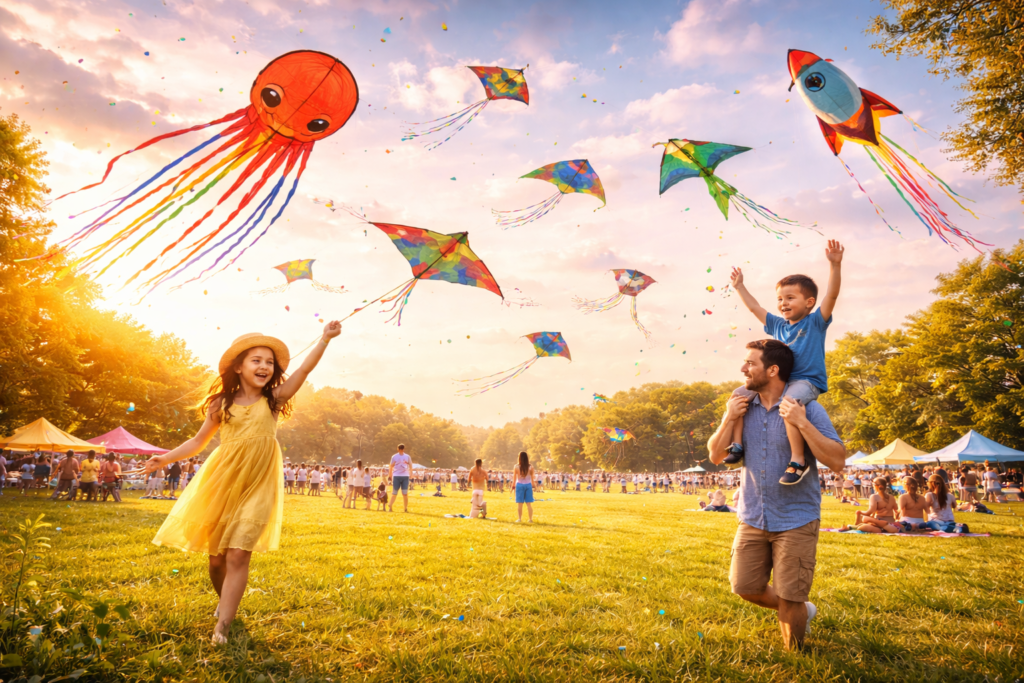
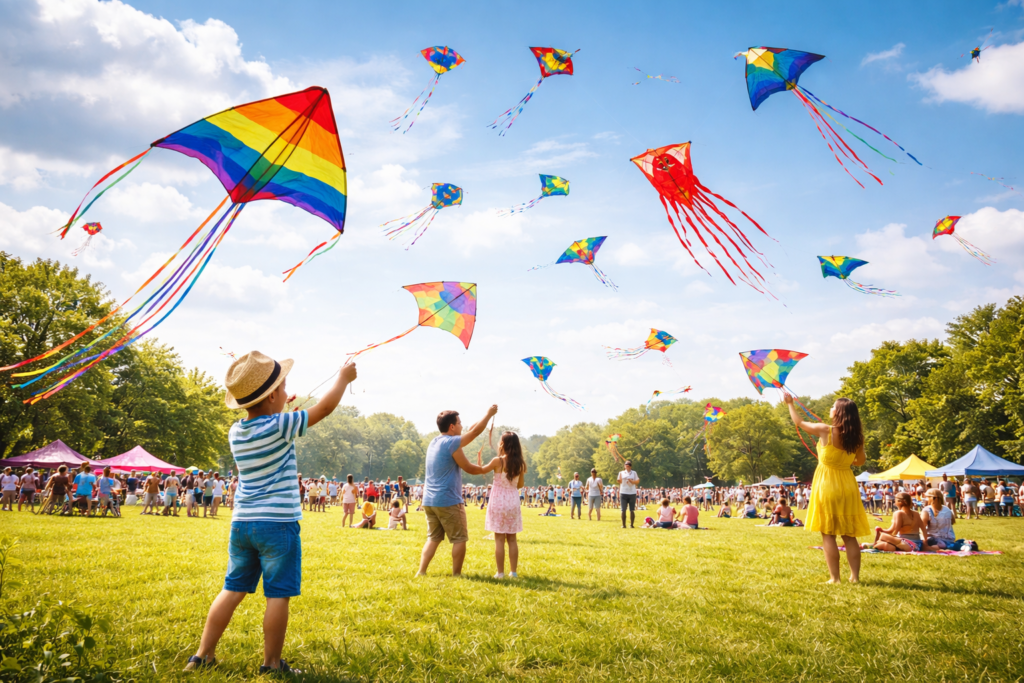
Kite festivals are globally recognized as one of the most lively and colorful events. Such festivals depict an aspect where people set aside their differences to come together, honor their traditions, carry out outdoor activities, and watch the sky being dotted with numerous colorful kites in various shapes and sizes. Kite flying is an activity that manages to break the age barrier as from kids to adults, everybody can be seen enjoying it, thereby making it a highly popular leisure activity at numerous places.
One of the main attractions of the Indian Kite Festival is the Kite Flying Festival celebrated on the occasion of Makar Sankranti in the month of January, which is renowned for its stunning aerial displays. Ahmedabad, Jaipur, and Udaipur are the cities that attract kite, flying competitions from all over. The participants design delicate kites and make special strings called manjha for having a playful fight, where they cut the opponents kite in the air. The thrill and happiness of witnessing kites reaching the sky are beyond compare.
Besides India, places like Japan, Thailand, and Brazil also have their own distinct kite festivals. The Hamamatsu Kite Festival in Japan is a major crowd, puller where people come from far and wide to witness the giant kites soaring against the blue sky. During the Bo Sak Kite Festival in Thailand, the spotlight is on authentic kite designs which remind the locals of their cultural roots. In Brazil, kite flying during holidays is accompanied by creative kite paintings and it becomes a feast for the eyes of the spectators.
Besides fun, kite festivals usually have some environmental and educational touch as well. Most of the festivals promote eco, friendly kite, making methods such as the use of biodegradable materials and natural dyes. These green kites serve as a medium to raise environmental awareness alongside the celebration of the culture and traditions.
Besides that, these festivals have economic importance as well. For instance, local artisans and craftsmen enjoy the benefits of kite, making workshops, kite sales, and festival, related tourism. Besides that, hotels, restaurants, and travel agencies get more business as visitors come to the biggest festival spots. As a result, local economies get a lift, and cultural tourism is also encouraged.
Kite festivals are more than just fun for kids. While making kites, they get to know physics, aerodynamics, and unleash their creativity. In fact, schools and neighborhood halls most of the time invite to kite, making contests and workshops, thus, children get to learn problem, solving skills and teamwork.
Kite festivals are also a sign of hope, freedom, and unity. The sight of hundreds of kites flying high can represent the launching of dreams and aspirations. People, be it families or friends, come together to eat, rejoice, and make their relationship stronger through the creation of timeless memories.
To sum up, kite festivals are a wonderful combination of culture, entertainment, and the spirit of the community. It does not matter if it is the traditional kites of India, the artistic exhibitions in Japan, or the technological innovations in Brazil, these festivals charm human hearts everywhere. They are a fte of hues, ingenuity, and kite flying fun, which turns each festival into a fairy tale moment for all the participants.