
How Educational Toys Help Children Learn Through Play
How Educational Toys Help Children Learn Through Play
Children naturally learn by discovering the environment in which they live. With a little guidance they learn by touching, feeling and carrying; by watching and listening; by asking questions; by climbing, scratching and scribbling. In essence every moment can be made into a moment of learning. And one of the easiest ways of achieving this is simply by taking advantage of play.
Play is no longer just a pastime for children. It can actually be an effective learning tool, passing on information as well as developing skills that children will need in everyday life. Children, for example, can be learning the basics of something like using building blocks, completing puzzles, play counting games, matching cards or using a creative activity pack without even being aware that they are learning.
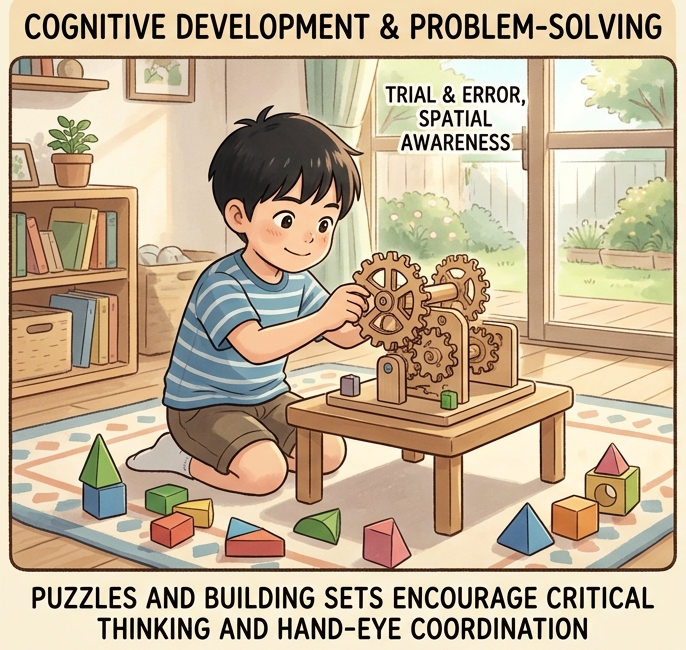
This plays into the best use of play-based learning for the very young. Instead of forcing them to remember the facts, children can manipulate objects and learn from having a go. A lot of educational toys involve children trying to solve problems. A puzzle, for instance, presents each child with different pieces and tasks him or her with working out where they might fit.
Construction toys allow children to experiment with shapes, dimensions and balance. If they have failed, they can always try again. This teaches the child patience and gives them a chance to get the answer right. It also shows that everyone can make mistakes. Language which stimulates creative play. Drawing items, construction items, creative activities, imitative activity toys, and card stories all help children to make their own creations.
There doesn’t always have to be one ‘correct’ answer. The child can create their own structure, their own character or tell their own story. This type of activity encourages thinking and imagination. Educational toys can also teach some very basic concepts of the school curriculum in a fun way. Toys that count can help children learn concepts of numbers. Alphabet cards can help children learn shapes and sounds.
Shape and color activities can support early recognition skills. And these activities are not a substitute for the regular teaching. On the contrary, they can be used plus classroom activities to provide children with an relaxed situation to practice their knowledge.
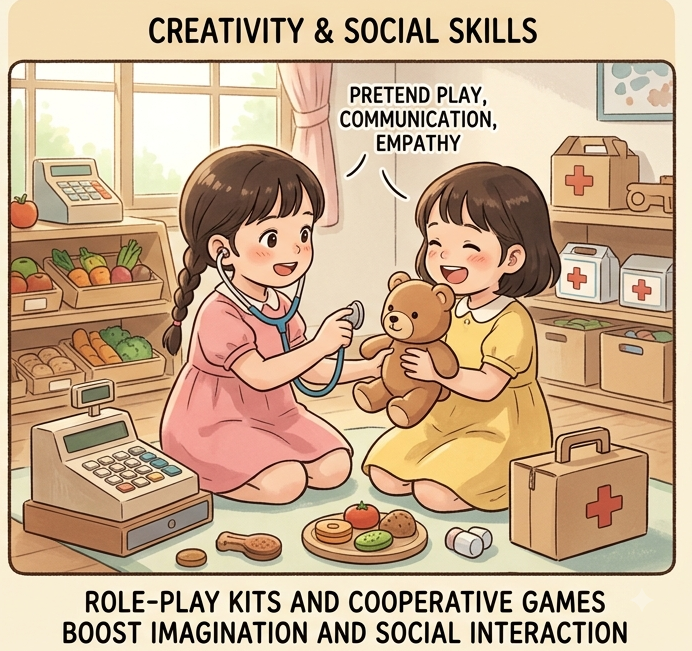
Some educational games are meant to be played with more than one child. When children play with their parents teachers brothers, sisters or friends they get the chance to talk listen share and work together.
For example, students can learn about following rules and patience in a basic board game. Through engaging activities with their peers, children can develop learned skills like sharing and listening to the ideas of others.
Developing Fine Motor Skills
Many toys involve physical movements such as placing the objects into the boxes, linking blocks sketching differentiating, or solving the puzzles. Children learn to practice movements of their hands and fingers through these activities.
Children rely on fine motor skills for daily tasks like grasping pencils, manipulating scissors, tying shoes, and handling small objects, which is the reason a sound fine motor development is crucial.
Selecting a Quality Educational Toy
The most educational toy will not always be the one that has a lot of functions or the most expensive. Rather, they should be able to determine the best based on characteristics, interests, and learning requirements of the child.
The ideal toy will not only be safe and simple but it must have a level of complexity that is still interesting enough for the child to return to it. Also, it is beneficial to select the type of playthings that give room for children to discover on their own rather than those that can only be played in a limited way.
Summary
Learning becomes a little bit more pleasant when toys help children play and explore at the same time. Through a toy, children may develop their problem-solving skills creativity communication, early knowledge, and motor abilities. Of course, children love having the freedom to think and do things in ways that match the style of the toy.
Parents and teachers who pick toys and activities suitable for the age of the children, as well as, when they feel free to play with kids, the ordinary game time can turn a valuable and meaningful experience for the learning process. A child is not going to learn everything during the game. The aim is rather to set up a context in which learning takes place through games and the children can have a good time at it.