
China’s Zhuque-3 Reusable Rocket Makes Historic Landing
China’s Zhuque-3 Reusable Rocket Makes Historic Landing
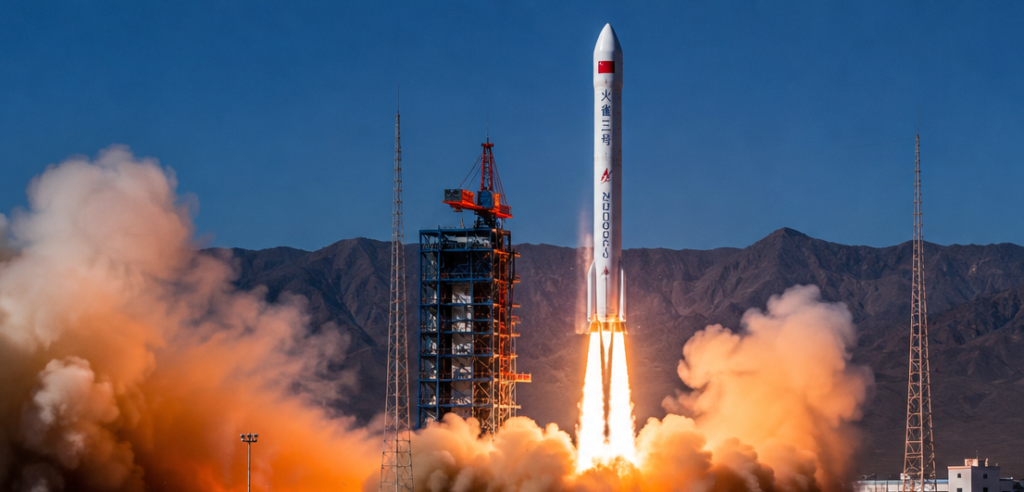
The landing of China’s first ever stage of a reusable rocket is a notable success for China, which on 19 th Aug 2026 recovered the first stage of its Zhuque-3 rocket, it is a headway for China’s commercial space industry. Zhuque-3 was a proving flight to prove an orbital-class booster could return after launch.
On 19 October 2023 Zhuque-3 launched from the Dongfeng Commercial Space Innovation Pilot Zone in northwest China and, after achieving its planned flight trajectory, the first stage attempted a guided descent to a pre-selected landing zone.
Re-usable rockets are gaining significance in the contemporary space business. Conventional rockets are almost all, single-use launches. Once a payload is carried into space, the stages will be ejected into space or allowed to fall into the ocean.
Re-use technologies intend to alter the performance of a space vehicle. This may gradually bring down the expense of deploying satellites and other payloads into orbit. This reduction in launch costs might provoke a proliferation of space-based endeavors on the part of corporate institutions, academic institutions and government agencies.
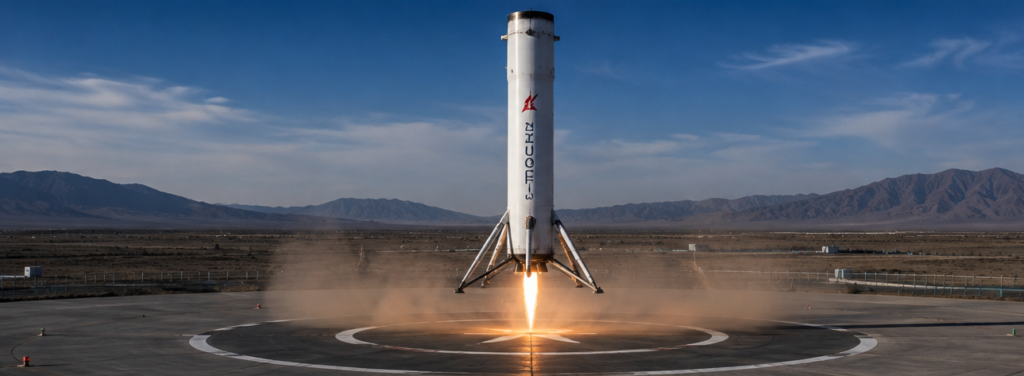
Zhuque-3 is the most recent two-stage, re-usable funded project: use liquid oxygen and methane as its propellants. Its first stage can be returned in a fly-back mode. This is a note of particular achievement as lining a rocket booster is extremely sensitive to instantaneous driver control of speed, heading and altitude.
Withstanding the severe environment of atmosphere reentry is common to reaching the landing zone safely. China is more involved in the commercial space field. Private aerospace companies in the country are working on developing launch vehicles and technologies that would be able to tap into the expanding worldwide satellite launch market.
The use of reusable rockets has been pioneered by other companies like SpaceX and Blue Origin. The advances of China with Zhuque-3 demonstrate how reusable launch systems are becoming a more and more competitive arena in the global space industry.
The next step will be to show that the is recovered equipment is able to be made ready for the next flight.
If you have a nice stable landing, you have only completed part of the reuse process. The engineers then need to find the booster, look it over for damage or wear and check if it is safe to re-launch. If the technology holds up over several missions, reusable rockets will contribute to reducing launch costs and the number of commercial space missions.
The commercial satellite market is expanding constantly and this tends to be accelerated by the advent of reusable-rocket technology.
Communications weather navigation and scientific satellites all depend on a dependable and inexpensive access to space for this proliferation: the next few decades, intense rivalry between space companies and nations could bring developments in rocket technology.
An increased number of reusable launch systems may make space travel more available for corporate and scientific organisations.