
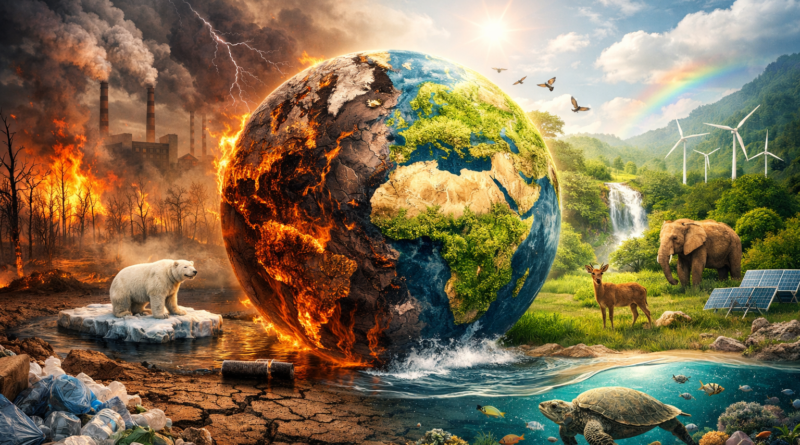
Climate Change And the Triple Planetary Crisis Our Planet Needs an Immediate Response
We are witnessing a grave environmental crisis on our planet, the so, called triple planetary crisis, which brings together climate change, loss of biodiversity, and pollution of the environment. These three problems are not only interrelated but also their union at the global scale is already affecting ecosystems, economies, and human health all over the world. The Earth got warmer by about 1 degree Celsius since the pre, industrial period, leading to more frequent and intense events of heat, floods, droughts, and storms. These changes pose a serious threat to agriculture, water, and hence the means of living of people, so climate adaptation is a very high priority now.
Meanwhile, the variety of life on Earth (biodiversity) is being lost at a scary pace as a result of cutting down forests, destroying habitats, overfishing, and polluting. The disappearance of species damages ecosystems, thus making them less capable of producing food, clean water, and climate regulation, all necessary for human life. Therefore, the protection of animals and the preservation of the natural environment are measures of utmost importance not only for the sake of wildlife but also for our own survival since we daily depend on the ecological services provided by nature.
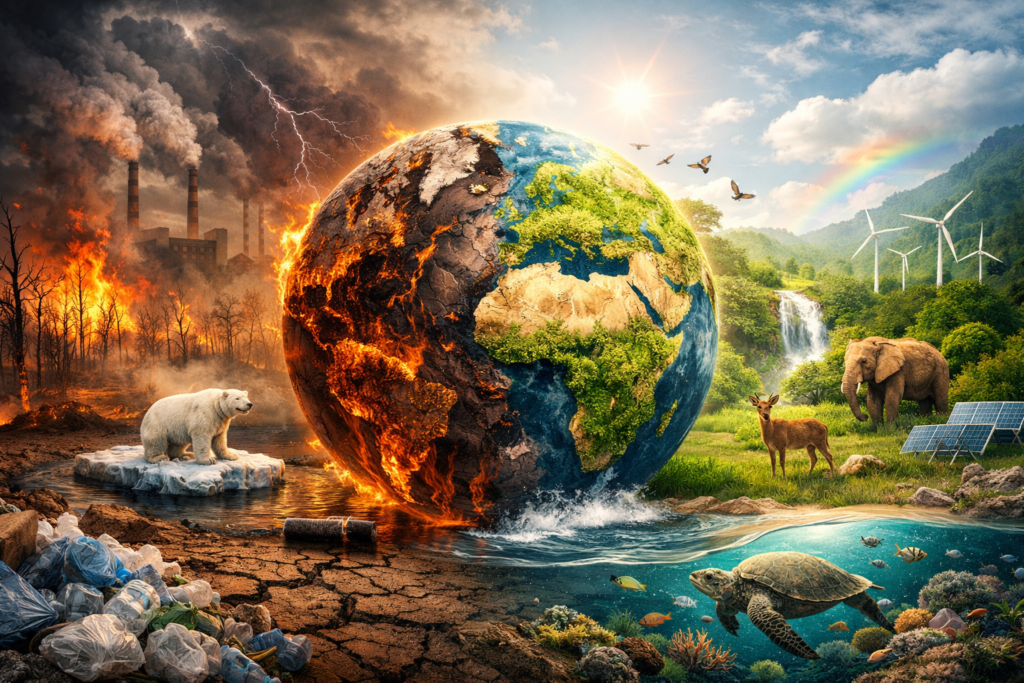
Furthermore, pollution of various forms is a major factor in escalating the problem. Plastics disposal, toxic chemical usage, and release of industrial gases are contaminating the earth, air, and water, which in turn seriously threatens the health of both humans and animals. Polluted air is one of the factors of respiratory diseases, polluted water becomes a source of diseases through drinking water, and polluted land becomes less fertile and thus causes a domino effect of environmental and social problems.
In order to tackle these problems, a comprehensive strategy is needed because concentrating on one problem and not on the others might bring a situation that is worse. Worldwide, governments are implementing measures to decrease carbon emissions, increase the use of renewable energy, and protect nature, but these initiatives should be done at a faster pace and on a larger scale. Climate change policies, forest recovery schemes, and animal protection legislations are significant

People too have a vital part to play in environmental protection by making conscious choices every day such as waste minimization, energy saving, and choosing green products and practices. When the same small actions are done by millions of people, it can lead to a significant positive impact on the environment. Also, through public engagement and awareness campaigns, the significance of sustainability can be made clear to communities.
Innovation and technology open the way for new solutions that involve cleaner energy, sustainable agriculture, and better waste management systems. Examples of such strategies are solar and wind power, electric vehicles, and the circular economy, which not only help to reduce the environmental footprints but also contribute to the economic growth.
Coordination at the local, national, and global levels is necessary in order to develop policies that would achieve a balance between economic growth and environmental safety. International treaties like the Paris Climate Accord and conservation efforts serve as the basis for collective work, however, the key to success lies in a regular implementation and public involvement.
The environmental issues are very serious, but there still is the possibility of a better future if we start taking strong measures now. It is a joint effort to save the Earth where the government, companies, and individuals cooperate for the purpose of climate change mitigation, biodiversity restoration, and pollution reduction. By adopting sustainable lifestyles and making deliberate decisions, we can provide our descendants with a planet that is more vibrant, safe, and capable of withstanding the challenges of tomorrow.