Grahan Timing Today Complete Details, Significance, and Safety Tips
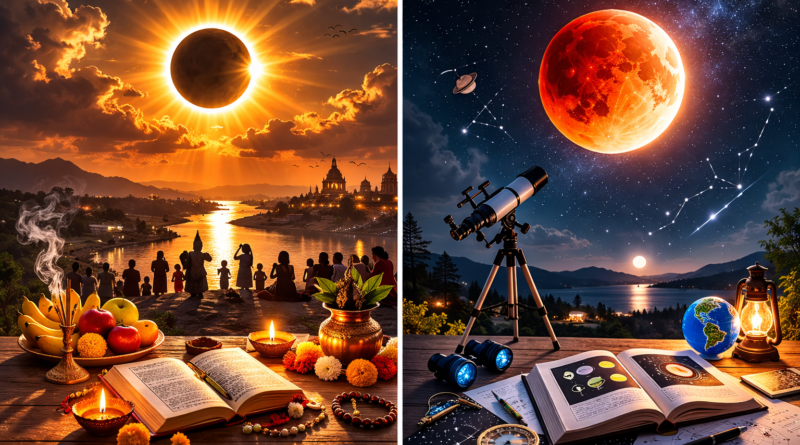
Most people look for grahan timing today in order to get the exact hour of the eclipse and also to understand its significance. Grahan or eclipse is an amazing astronomical phenomenon when one celestial body comes into the shadow of another. Mainly there are two types of eclipses, solar and lunar. A solar eclipse is the event when the Moon goes between the Earth and the Sun and thus blocks the sunlight either partially or totally. In case of a lunar eclipse, the Earth is between the Sun and the Moon, thus, the shadow of the Earth falls on the Moon.
The grahan timing today is based on the kind of eclipse and your location. In India, the timings of an eclipse are generally divided into three phases: the start (Sutak period), the time of maximum eclipse, and the finishing time. The Sutak period, which is mainly associated with Hindu faith, is a few hours before the actual eclipse and starts generally. At this time, people usually refrain from cooking, eating, or engaging in any new activities.
Indian Space Research Organisation, NASA, and other similar agencies utilize astronomical calculations to accurately predict eclipse timings decades ahead. They analyze satellite data and employ mathematical models to calculate the exact phases of an eclipse, that is, the beginning, maximum, and ending of the grahan. It is always advisable to consult official websites or trustworthy news outlets for the correct timings of the grahan in your city.
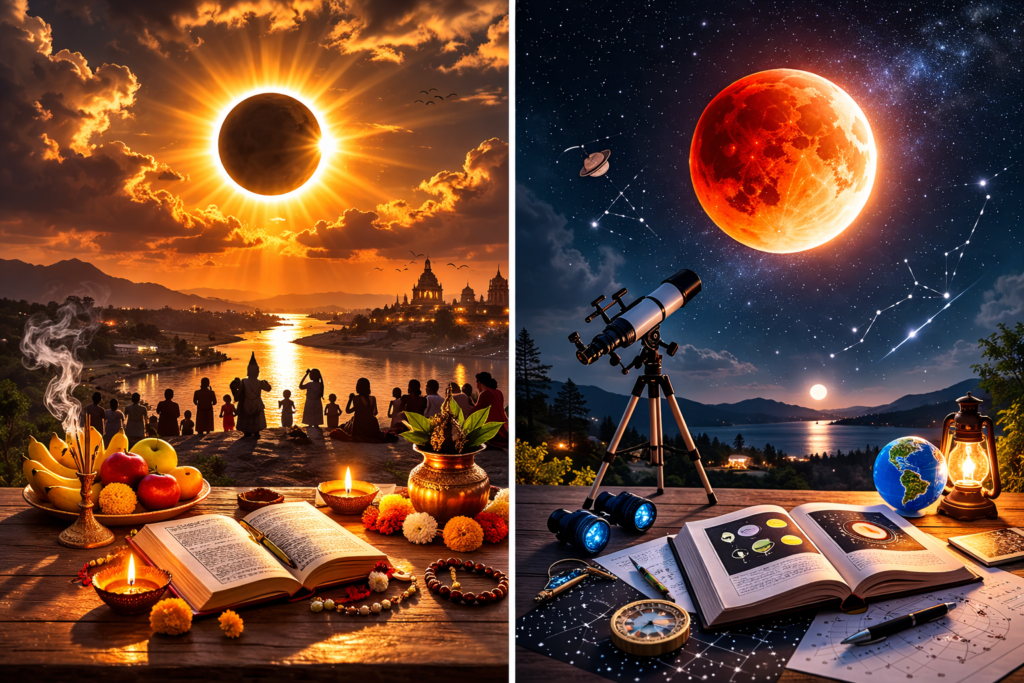
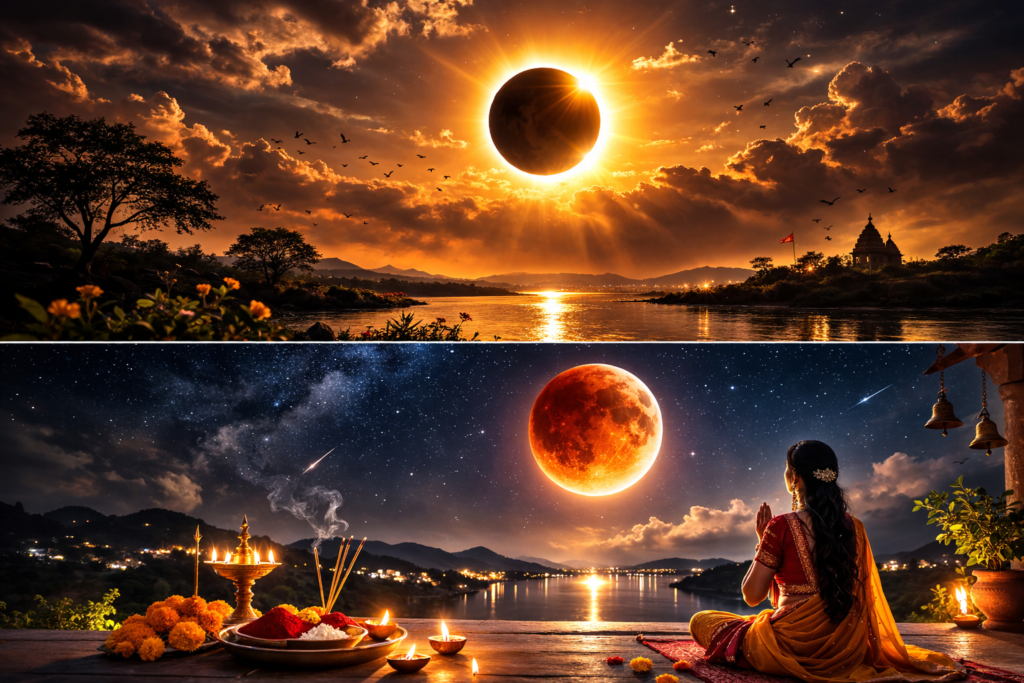
The cultural importance of a grahan in India is strongly influenced by the mythology aspect. Ancient scriptures narrate the legend of Rahu and Ketu two shadow planets associated with eclipses, as per popular beliefs. Most devotees choose to recite mantra, meditate, or simply keep away from the outside world during the time of the sun or moon eclipse. Following the grahan, people generally have a bath and do the house cleaning which is believed to be a part of the time, honored rituals.
Scientifically, an eclipse is simply a natural and harmless event. That said, it is very dangerous to look at the Sun during a solar eclipse without the right kind of eye protection. If you look at the Sun during an eclipse without properly certified glasses, your eyes can get very badly damaged. Those who know suggest either using solar filters that comply with the ISO standard or observing the phenomenon via indirect methods such as a pinhole projector. You don’t need to worry about eye safety when viewing a lunar eclipse because it can be safely seen with the naked eye.
Weather conditions also greatly affect visibility. With a clear sky one can most definitely see the grahan. If there are clouds, the eclipse might not be visible even if the time is correct. Besides looking at the timing of the grahan, people are also advised to check the weather forecast of their area for the best eclipse viewing experience.
Eclipses are also a source of great interest to photographers and astronomy enthusiasts. If you’re lucky, you can see the great red moon during a total lunar eclipse or the beautiful darkening of the daylight during a solar eclipse, a couple of moments that photographers can capture for a lifetime. It is also another opportunity to get close to outer space and arouse children’s and adults’ curiosity.
To sum up, grahan timing today is a very relevant topic to not just the people who have religious beliefs but also the fans of science. However, no matter whether you regard it as a religious event or a scientifically explained phenomenon, an eclipse is like a reminder of the exact and stunning movements of celestial bodies. It is always good to get updated with the official timings, follow the safety rules, and experience this “rare to see” natural event in a responsible manner.