
Middle East Tension & Oil Crisis 2026 Global Impact on Economy and Daily Life
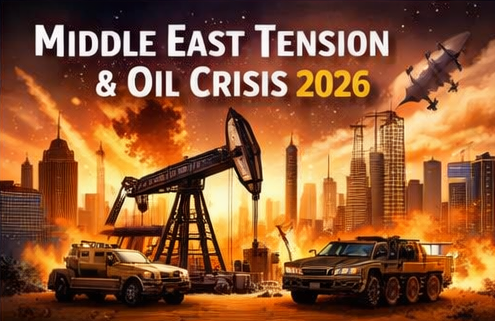
The Middle East has been a leading oil producer in the world for a long time, and resurgent tensions there in 2026 have once again caused anxiety globally. Countries in this region possess a large share of the world’s oil resources, and a conflict or instability there could have an immediate effect on international economies. As political and military hostilities escalate the concern for supply disruption gets stronger, which results in uncertainty and increasing oil prices worldwide.
The major factor why the global economy is affected by Middle East conflicts is that this region has a vital role in oil transportation. Critical sea passages such as the Strait of Hormuz are responsible for moving a large proportion of global oil exports. Any rise in tensions brings the possibility of shutting down or attacking oil tankers, thus halting supply chains. Even the mere prospect of such incidents is sufficient to drive oil prices higher, as the market is very sensitive to potential risks.
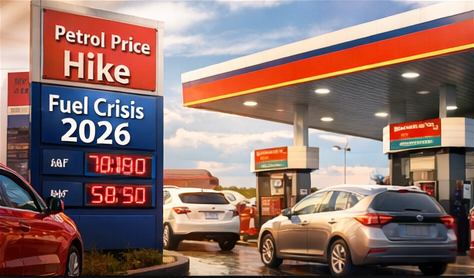
For nations like India that rely heavily on imported oil, the current situation presents major difficulties. Higher crude oil prices directly cause increased costs for petrol and diesel. This doesn’t only impact car owners but also affects transport, supply chains, and the total price of products. As fuel expenses go up, companies must raise their prices, which eventually hits regular consumers.
Inflation is one of the most visible results of an oil crisis. When fuel grows more expensive, it becomes more costly to move goods, leading to higher prices for basic items such as groceries, produce, and necessary goods. This sets off a ripple effect where living expenses grow across the board. Making it harder for families to stick to their budgets. Middle- and lower-income households face this issue Mainly.
The global economy also suffers under these conditions. Stock markets often experience sudden swings due to investor uncertainty. Sectors that depend on fuel, like air travel, shipping, and production – face rising costs and lower earnings. This can slow economic progress and result in layoffs in certain areas, adding pressure to people’s financial health. So, it seems difficult to avoid these consequences when oil prices spike. (This pattern has shown up consistently during past disruptions.)
Governments worldwide attempt to manage the scene by various means. They can not only lessen the tax burden on fuel but also let out the stockpiled oil or even find other energy sources to diminish the dependency on the oil from the Middle East. Besides a number of actions are taken through the embassies to ease the unrest and keep the area stable. Nevertheless, the public will be the first ones to suffer even if finally, the situation will be controlled.
Besides, the situation clearly reveals why it is essential to switch to renewable energy. As countries are seeking energy resources that can last for a long time, sun-, wind- and electric power are getting more and more enticing to them. Not only does the move to renewables with a lower carbon footprint allow one to handle such crises but it also makes a positive contribution to the environment. Several countries are currently employing clean energy solutions on a large scale, aiming at a secure tomorrow.
Last but not least, unrest in the Middle East and the resulting oil crisis are not only regional problems but global challenges that impact economies, businesses, and human life. Everybody knows about the rising prices of fuel causing a rise in inflation, but in reality, the consequences are almost everywhere and quite serious. By knowing where and how their life will be affected by the situation, the individual and government will be better-off and more capable of dealing with changing economic conditions in a world that is becoming more and more unpredictable.